Bogdan murders Tony Curran
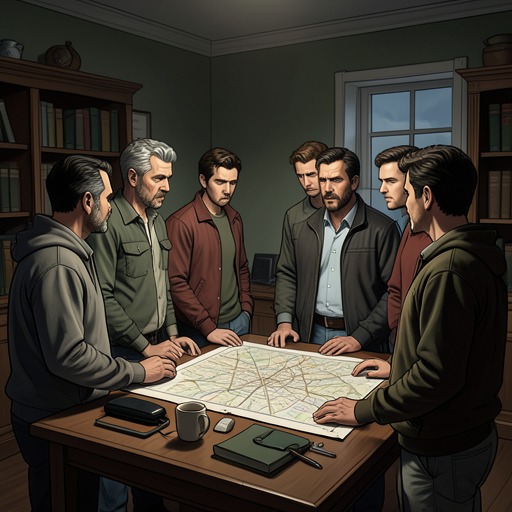
The Thursday Murder ClubBogdan’s murder of Tony Curran emerges through a confession and a pieced-together account of preparation rather than a direct depiction of the killing. The later disclosure changes the apparent shape of the case: Gianni Gunduz may be the convenient suspect, but Bogdan admits responsibility, and Joyce comes to believe that he is the person the police have failed to catch.
Preparation and Concealment
Bogdan tells Stephen that, a couple of months before the killing, he installed the surveillance system and cameras and fitted them incorrectly, leaving the system unable to record. His account makes the failure deliberate rather than accidental: the security equipment had been made useless in advance, removing the recordings that might otherwise have documented an intrusion. The detail supplies a concrete explanation for how Bogdan expected to act without leaving that form of evidence.
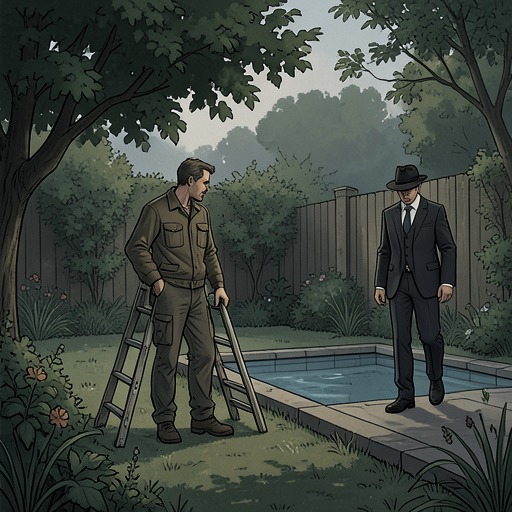
He also says that he had keys made and believed he could enter the house unseen. His description presents the murder as planned rather than spontaneous: he waited for the right time, considered the risk of being caught, and arranged access before acting. The evidence does not identify who commissioned the installation or spell out every step of the killing, but Bogdan’s own account links his tampering with the system and the copied keys to his opportunity to get inside.
The preparation did not make the moment entirely predictable. Bogdan recalls that the doorbell rang just after he had acted; he says he stayed calm. The account gives no identity for the caller and does not explain what followed, so the interruption remains a small but unresolved element in his retelling. Its presence nevertheless sets the planned, controlled entry against an unforeseen disturbance.
The Chess-Table Confession
The admission comes during a chess game between Bogdan and Stephen. Stephen tells Bogdan that, from what he has heard, he believes Bogdan killed Tony Curran. Bogdan looks around the room, then confirms that he did, adding that only one other person knows. The scene turns an inference into a direct admission, though it does not establish that the police have learned the truth or that the admission has been formally reported.
Stephen answers that he will keep the secret, then asks whether money was the reason. Bogdan rejects that explanation. He says money is something a person has to be careful with and should not be allowed to control them. This exchange narrows one possible motive without supplying another: the killing is not presented as financially driven, but Bogdan does not explain what prompted it. His remarks make clear that the motive remains important and withheld, rather than solved by the confession itself.
The conversation is filtered through Joyce’s account of the later scene. Stephen says Elizabeth talks to him, and Joyce’s narration makes the confession part of a chain of information moving among the residents. Bogdan tells Stephen something he has kept hidden; Stephen promises silence; Joyce, in turn, relates what she understands. The scene thus gives the reader decisive knowledge while leaving the characters’ public and legal knowledge uncertain.
Competing Suspicions
By the time Joyce reflects on Tony Curran’s death, the police are still looking for Gianni Gunduz. Joyce doubts that Gianni is the real answer. She questions the idea that he returned to kill Tony for informing on him, since the supposed reason for that informing does not make sense to her. Her reasoning does not amount to proof, but it identifies the weakness in the convenient explanation circulating around the case.
Joyce’s suspicion settles instead on Bogdan. She considers him too clever to be caught and says she is sure he had a good reason, although she does not know what it was. The reader has already been given the crucial confirmation in Bogdan’s conversation with Stephen; Joyce’s later certainty therefore carries dramatic irony. What remains uncertain to her is not whether Bogdan may have killed Tony, but whether Elizabeth suspects him too. Joyce reads Elizabeth’s apparent lack of recent pursuit of Gianni as a possible sign that her friend has also changed her view, while stopping short of claiming to know Elizabeth’s thoughts.
Aftermath and Significance
The confession does not produce an immediate confrontation or a reported arrest. Joyce says she looks forward to asking Bogdan about the matter, but postpones doing so until after he has fitted her replacement window. She worries that he might take offence. The ordinary errand and her caution sit uneasily beside the gravity of her suspicion: Bogdan remains close enough to be called upon for household work, even as Joyce believes he is a murderer.
That domestic proximity sharpens the event’s contrast between concealed violence and everyday routine. In Stephen’s account, the crime depended on preparation—disabled cameras and copied keys—but its later disclosure occurs across a chessboard, in conversation about money. In Joyce’s account, suspicion accompanies practical concerns about a window and the timing of a difficult question. The story gives no confirmed legal resolution here, and no definitive motive. Instead, it separates what the reader can know from what the police have established: Bogdan’s admission identifies the killer, while his reason, the other person who knows, and the consequences of the confession remain open.